If you are deciding between oceanfront and harborfront living in Newport Beach, you are not just choosing a home. You are choosing the rhythm of your day, the view outside your windows, and how public or private your waterfront experience will feel. The good news is that both options offer a distinct coastal lifestyle, and understanding the difference can help you focus your search with more clarity. Let’s dive in.
Oceanfront and harborfront mean different things here
In Newport Beach, oceanfront and harborfront are often separated by just a few blocks, but they can feel very different in daily life. Oceanfront usually refers to homes facing the Pacific on the Balboa Peninsula or around Corona del Mar State Beach. Harborfront usually points to homes along Newport Harbor’s channels, islands, moorings, and bay-facing streets.
That distinction matters because Newport Beach is shaped by very specific waterfront areas rather than one broad coastal market. The city identifies places like the Balboa Peninsula, Balboa Island, Lido Isle, and other harbor-adjacent districts as distinct village-style areas. So when you compare oceanfront vs harborfront living, you are really comparing two different ways of using the water.
It is also worth noting that the city classifies West Newport, Balboa Peninsula, and Newport Bay as low-elevation areas. For buyers considering any waterfront property, that is useful planning context as you evaluate block-by-block differences.
Oceanfront living in Newport Beach
Beach access shapes daily life
Oceanfront living in Newport Beach is built around direct access to sand, surf, and open water. Newport Beach has more than eight miles of beaches, and ocean and bay-front beaches are open to the public from 6 a.m. to 10 p.m. That public access helps create the active, social atmosphere many buyers want when they picture life by the Pacific.
On the Balboa Peninsula, the Ocean Front Walk and the Wedge are part of the everyday setting. Around Corona del Mar State Beach, you get a public surf and diving beach framed by cliffs and a rock jetty at the harbor entrance. If your ideal morning starts with a walk on the sand or checking surf conditions before coffee, oceanfront may feel like the natural fit.
The views feel wide and dramatic
Oceanfront homes tend to emphasize big Pacific views, sunsets, and changing surf conditions. In some parts of Corona del Mar, the outlook can also include the coastline and the harbor mouth. That open-water perspective is one of the main reasons buyers are drawn to the ocean side.
The tradeoff is that the shoreline is public-facing. Beach areas cannot be reserved, and they are first-come, first-served. In practical terms, that means the space outside your home may feel lively and shared, especially during busy beach seasons.
Privacy is more limited by design
If privacy is high on your list, it helps to think honestly about how public the beach environment is. Oceanfront living comes with the energy of visitors, beach parking, boardwalk activity, and a shoreline that is meant to be shared. For some buyers, that is exactly the appeal. For others, it can feel less controlled than they want.
The city also places rules on beach use, including limits on items and activities such as grills, amplified sound, tents, and large groups. Those rules shape the environment, but they do not change the basic reality that oceanfront living in Newport Beach is closely tied to a public beach setting.
Harborfront living in Newport Beach
Boating access is often the priority
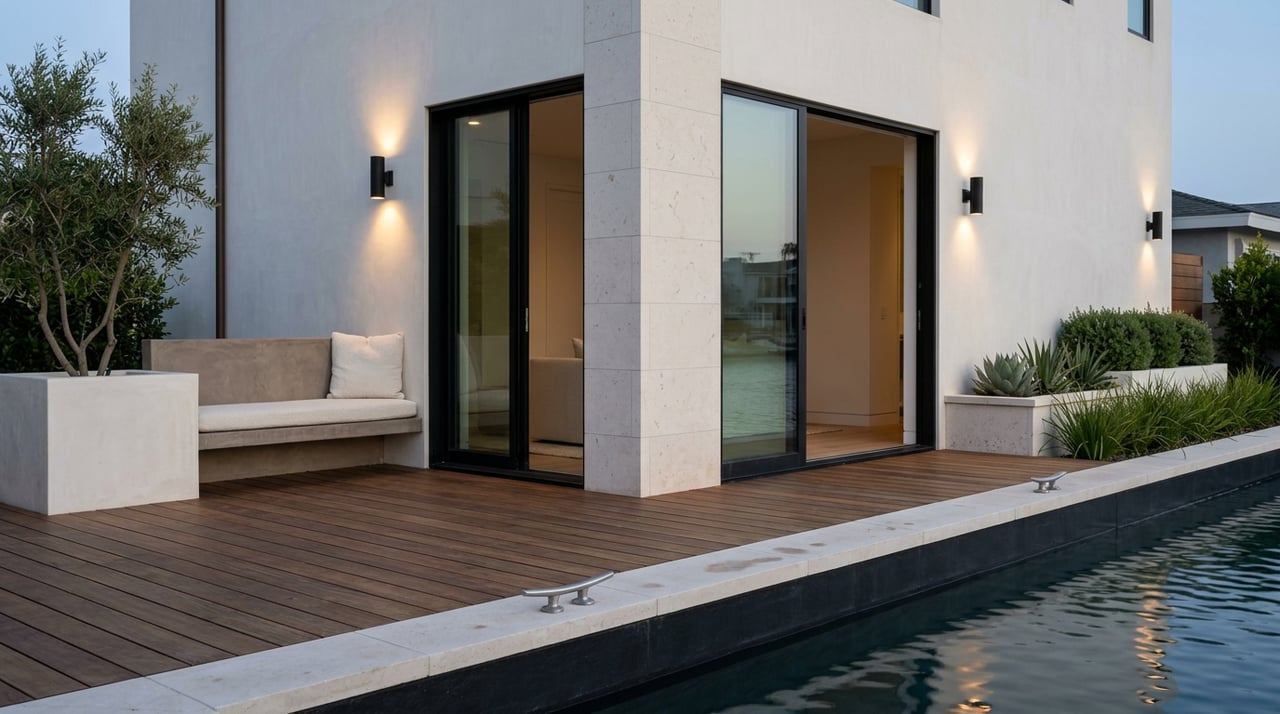
Harborfront living is centered on calmer water, boating, docks, marina activity, and bay-facing streets. Newport Harbor is more than three miles long, extends into the Back Bay, and runs along the inside of the Balboa Peninsula and among seven harbor islands. The harbor is also home to more than 9,000 recreational vessels, which gives you a sense of how deeply boating is woven into daily life here.
Unlike the open Pacific, the harbor environment feels more protected. The harbor entrance and main channel are regulated by a no-wake rule and a 5 mph speed limit. That creates a noticeably different pace from the ocean side.
The setting often feels more residential
Many buyers are surprised by how neighborhood-oriented harborfront living can feel. The city identifies the harbor islands as strictly residential areas, including Bay Island, Collins Island, Harbor Island, Lido Isle, Linda Isle, Little Balboa Island, and Newport Island. That often creates a more tucked-away atmosphere than beach-adjacent frontage.
Harborfront views are also different in character. Instead of looking over surf and sand, you may look out at sailboats, docks, interior channels, bridges, and island scenery. For buyers who want water views with a more sheltered and residential feel, that can be a major advantage.
Harborfront is calmer, not silent
Harborfront living often feels quieter than oceanfront, but it is not completely still. Newport Harbor remains active, and the city notes heavy traffic at the entrance channel. You should expect vessel movement, marina activity, and the day-to-day energy that comes with one of the country’s largest recreational harbors.
At the same time, places like the Balboa Island ferry, Lido Marina Village, Mariner’s Mile yacht services, and the city’s mooring fields and guest slips all support a boating-first lifestyle. If you picture stepping into a Duffy, paddleboard, or larger vessel more often than stepping onto the sand, harborfront may align better with your routine.
Property differences buyers should expect
Not every waterfront home is a modern estate
One of the most useful things to remember is that Newport Beach still has a strong traditional cottage pattern in older waterfront areas. The city’s cottage preservation program notes that smaller homes representative of traditional development patterns are especially common in old Corona del Mar, Balboa Island, and the Balboa Peninsula. Some are one-story, while others include a small second story above rear parking.
That means your waterfront options may range from classic cottages to larger renovated homes and newer luxury residences. If you are searching in either oceanfront or harborfront areas, it is smart to look beyond the label and study the actual block, lot, and structure.
Harborfront ownership may involve more permit questions
Harborfront buyers should pay close attention to docks, piers, floats, and moorings. The city requires formal transfer processing for pier permits, regulates pier and float extensions, and uses Harbor Design Criteria for waterfront facilities. The city also runs a mooring permit and license system.
In plain terms, you should not assume that every harborfront property automatically includes a dock or that every existing waterfront improvement works the same way. The exact configuration, permit status, and usability of the waterfront improvements are all part of the property story.
Oceanfront ownership comes with public shoreline realities
Oceanfront ownership has a different set of questions. Instead of focusing first on dock rights or mooring systems, buyers often need to think about beach use, public access, and how much activity happens outside the home. Since the shoreline is shared and beach space is first-come, first-served, oceanfront living can feel more exposed to daily public use.
That does not make it better or worse. It simply means the ownership experience is shaped by a different set of realities than harborfront property.
How to decide which lifestyle fits you
Choose oceanfront if you want beach energy
Oceanfront may be the better fit if your priorities include:
- Direct access to sand and surf
- Big Pacific views and sunsets
- A more active, public-facing waterfront setting
- Daily routines built around the beach
This choice often appeals to buyers who want the classic Southern California beach experience right outside the door.
Choose harborfront if you want boating access
Harborfront may be the better fit if your priorities include:
- Calmer water and protected channels
- Dock or mooring potential
- A more neighborhood-oriented waterfront setting
- Daily life built around boating and harbor access
This option often appeals to buyers who want a waterfront home that feels more tucked into the fabric of Newport Beach.
Why the block matters most
In Newport Beach, broad labels only tell part of the story. Because oceanfront and harborfront areas can change quickly from block to block, the right decision often comes down to very specific location details. A home near the sand on the Balboa Peninsula will live differently from a harbor-facing home on an island street, even if both are considered premier waterfront properties.
That is why a strategy-first search matters in this market. The most successful buyers start by defining how they want to live each day, then match that lifestyle to the right micro-location, view corridor, and ownership setup.
Whether you are drawn to surf, sunsets, and beach access or calmer water, docks, and a more residential waterfront feel, clarity comes first. If you want expert guidance on Newport Beach’s waterfront micro-markets, Brian Sperry can help you evaluate the details that matter most.
FAQs
What does oceanfront living usually mean in Newport Beach?
- Oceanfront living usually refers to properties facing the Pacific on the Balboa Peninsula or around Corona del Mar State Beach, with daily life shaped by beach access, surf, and public shoreline activity.
What does harborfront living usually mean in Newport Beach?
- Harborfront living usually refers to homes along Newport Harbor’s channels, islands, moorings, docks, and bay-facing streets, with a stronger focus on boating and sheltered water.
Is harborfront living in Newport Beach more private than oceanfront living?
- In many cases, yes. Harborfront areas, especially on strictly residential harbor islands, often feel more secluded than oceanfront homes next to public beaches and boardwalk activity.
Are all Newport Beach harborfront homes sold with docks or moorings?
- No. Harborfront buyers should confirm the specific dock, pier, float, or mooring setup and review the city’s permit framework rather than assume every waterfront property has the same access or improvements.
Is oceanfront living in Newport Beach quieter than harborfront living?
- Usually not. Oceanfront living is generally more public-facing because of beach access and visitor activity, while harborfront often feels calmer due to protected water and more residential surroundings.
What is the biggest difference between oceanfront and harborfront homes in Newport Beach?
- The biggest difference is lifestyle. Oceanfront is centered on sand, surf, and open Pacific views, while harborfront is centered on boating, calmer channels, and a more neighborhood-oriented waterfront experience.