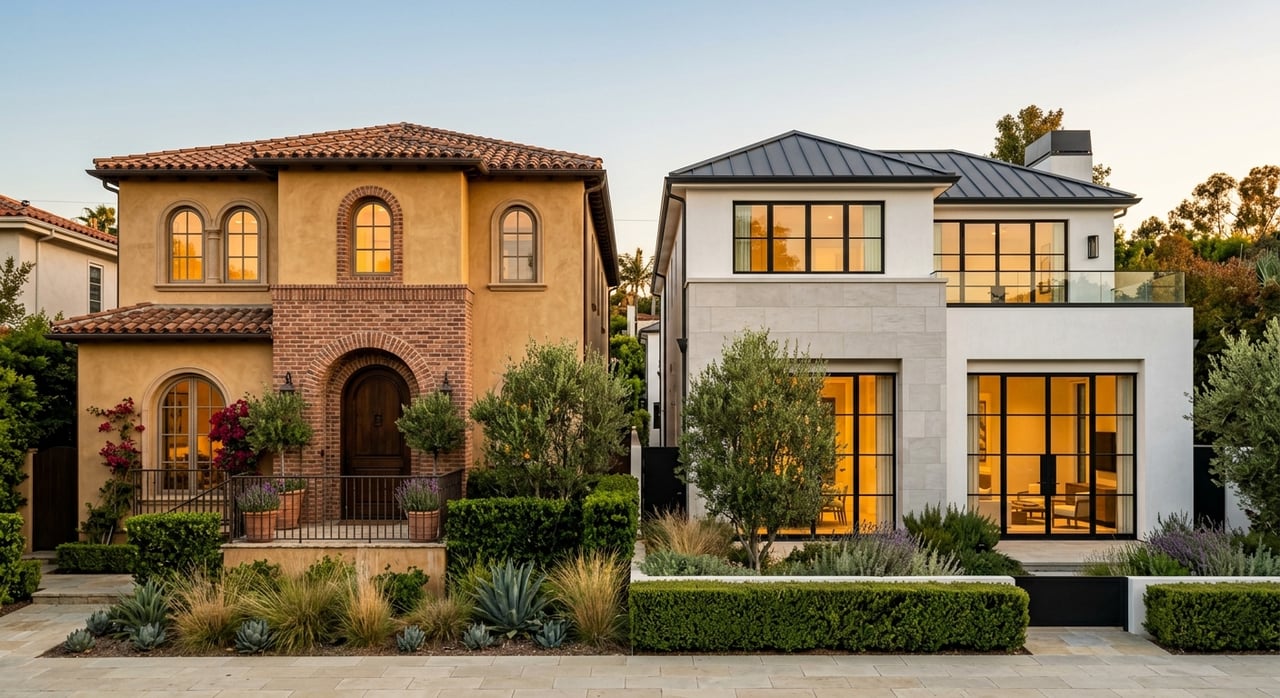
If you have spent any time in Corona del Mar, you already know one thing: this is not a one-style market. On one block, you might see a smaller cottage with a simple, classic profile. A few streets away, you may find a newly built coastal contemporary with retractable glass and a rooftop deck. That mix is part of what gives Corona del Mar its identity, and understanding it can help you buy, renovate, or sell more strategically. Let’s dive in.
Why Corona del Mar Feels Distinct
Corona del Mar is often described as a village-scaled coastal market, and that matters when you look at the homes here. Newport Beach planning documents describe the area as a pedestrian-oriented village that serves surrounding neighborhoods and helps define Corona del Mar’s character.
That village feel shows up in the architecture. Official city materials and local context point to a blend of vintage cottages along the Flower Streets and larger homes on the cliffs. Instead of one dominant look, Corona del Mar offers a layered architectural story shaped by different eras, lot patterns, and lifestyle priorities.
Cottage Homes Shape Old Corona del Mar
What defines a Corona del Mar cottage
Beach cottages are one of the clearest and most recognizable home types in old Corona del Mar. The city describes these cottages as smaller dwellings that reflect traditional development patterns, typically one-story and varied in style and age.
Local reporting also helps paint the picture. Many of these homes were built in the 1930s through 1950s and are known for low-slung forms, picket fences, and multi-paned windows. Even today, remodeled cottages remain active in the market, which shows that this style still carries real appeal.
Why cottages still matter
Cottages do more than add charm. They help preserve the scale and rhythm of older Corona del Mar blocks, especially in areas where buyers value walkability and a more intimate street presence.
For many buyers, a cottage offers character that cannot be easily recreated in new construction. The appeal often comes from proportion, simplicity, and the way the home sits on the lot, not just the finishes inside.
Coastal Contemporary Leads Newer Construction
Key features buyers notice
If cottages tell the story of old Corona del Mar, coastal contemporary homes represent the direction of much of the newer custom inventory. Recent listings in the area show a clear design language centered on open-concept layouts, retractable glass, rooftop decks, balconies, elevators, and indoor-outdoor entertaining spaces.
These homes are designed to maximize light, flexibility, and connection to the coastal setting. In practical terms, that often means wide openings to patios, easy movement between living spaces, and layouts built for both everyday comfort and hosting.
Why this style performs well
The current market suggests buyers respond strongly to homes that feel bright, functional, and architecturally consistent. In Corona del Mar, that usually means a home that delivers a clear indoor-outdoor lifestyle narrative rather than a collection of disconnected upgrades.
That fit matters in a premium market. Zillow places the typical Corona del Mar home value at $4.233 million as of May 31, 2026, while Realtor.com reports a 92625 median listing price of $4.895 million, a median sold price of $3.9375 million, and 56 median days on market. At this level, buyers often notice whether a home feels fully resolved in its design.
Mediterranean and Revival Styles Stay Relevant
A long-running part of the local mix
Mediterranean-inspired homes remain a visible part of Corona del Mar, especially in view-oriented areas such as Irvine Terrace. Current listings still use Mediterranean-inspired language, which shows that this style continues to resonate in the luxury segment.
The broader revival category in Corona del Mar is also more varied than many people assume. Newport Beach historic inventory includes Mission Revival and Cape Cod examples in the area, and current listings continue to show Cape Cod references in the market.
What gives these homes staying power
Mediterranean and revival homes often appeal to buyers who want established architectural cues. That can include recognizable rooflines, traditional proportions, and material choices that feel timeless rather than trend-driven.
In a market with many new builds, these homes can stand out by offering a different kind of presence. When updated thoughtfully, they often balance classic exterior character with more current interior function.
Mid-Century and Ranch Homes Add Another Layer
Where modern design fits in
Mid-century modern is also part of the broader Newport Beach design story, and local coverage has identified Harbor View Hills in Corona del Mar as one of the neighborhoods associated with modern architecture. That history still shows up in today’s listings.
Current examples include single-story mid-century ranch homes that emphasize natural light and vaulted ceilings. These homes bring a very different feel from cottages or newer contemporary builds, but they remain an important part of the area’s architectural range.
Why buyers are drawn to them
Mid-century and ranch properties often appeal to buyers who value single-level living, clean lines, and lot utility. In some cases, the draw is the layout. In others, it is the opportunity to preserve or refine a distinct design identity.
These homes also tend to offer a clear architectural point of view. In a market where style matters, that clarity can be a meaningful advantage.
What Architecture Signals to Buyers
Style tells a story before square footage does
In Corona del Mar, buyers are not just evaluating bedrooms, bathrooms, and views. They are also responding to how clearly a home expresses its style. That first impression can shape how the entire property is perceived.
Based on the current mix of homes, cottages often attract buyers who want character and scale. Contemporary homes tend to appeal to buyers seeking turnkey function. Mediterranean and revival homes often connect with buyers who want established luxury cues, while mid-century homes can draw those who value single-level living and a strong design identity.
Walkability strengthens the appeal
Architecture in Corona del Mar does not exist in a vacuum. The city describes the area as a pedestrian-oriented village, and local visitor materials highlight the walkable shopping district.
That means a home’s style is often experienced together with its setting. A cottage near the Village, for example, may feel especially aligned with the neighborhood context, while a larger view home may be valued for a different kind of architectural presence.
Renovation Decisions Need Local Strategy
Design is not the only issue
In Corona del Mar, renovation choices are closely tied to local rules. Newport Beach states that development in the coastal zone generally requires a coastal development permit unless a project is exempt.
The city also notes that some single-family and duplex work is excluded only when it is not abutting beaches, Newport Harbor, Upper Newport Bay, or coastal bluffs. On top of that, Newport Beach has pursued residential design standards in response to massing and bulk concerns in new single- and two-unit dwellings.
Cottage rules are especially specific
For cottages, the city’s voluntary preservation program creates a very specific path. It allows larger additions of up to 50 percent of the existing floor area or 750 square feet, but the building envelope must remain cottage-like.
That includes a one-story front half, a two-story rear half, and no third floors or third-floor decks. For owners of older homes, preserving form and proportion is not just a design preference. It can directly affect what is feasible and how the property fits market expectations.
Selling Strategy Should Match the Style
Work with the home, not against it
If you are preparing to sell in Corona del Mar, one of the smartest moves is usually to lean into the home’s existing architectural family. Buyers tend to respond better when a property feels coherent rather than partially updated in a way that blurs its identity.
For cottage homes, that often means protecting scale, window patterns, and the overall street-facing profile. For contemporary homes, it usually means keeping the indoor-outdoor experience strong and consistent. For Mediterranean, Cape Cod, or other traditional homes, updates tend to land best when they modernize function without erasing the style’s defining materials and proportions.
Presentation matters in a premium market
In a high-value market like 92625, details carry weight. When buyers are comparing several compelling options, architectural clarity can influence both emotional response and perceived value.
That is why pre-sale planning matters. The right preparation, design direction, and marketing story can help buyers understand not just what your home has, but what your home is.
Why Local Guidance Makes a Difference
Corona del Mar’s housing stock is mixed by design, and that is part of its appeal. But that variety also means there is no one-size-fits-all approach to pricing, presentation, or renovation planning.
A cottage in old Corona del Mar, a Mediterranean home in a view neighborhood, and a newer coastal contemporary may all compete differently, attract different buyer motivations, and require a different strategy. When you understand the architectural language of the property and how it fits the local market, you can make more confident decisions.
If you are thinking about buying, renovating, or selling in Corona del Mar, a strategy-first conversation can help you evaluate how architecture, positioning, and timing work together. To start that process, connect with Brian Sperry.
FAQs
What architectural styles are most common in Corona del Mar homes?
- Corona del Mar includes a mix of beach cottages, coastal contemporary homes, Mediterranean-inspired homes, revival styles such as Mission Revival and Cape Cod, and some mid-century modern or ranch properties.
What defines an older Corona del Mar cottage home?
- Older Corona del Mar cottages are typically smaller homes that reflect traditional development patterns, often with one-story forms, simple proportions, and features like multi-paned windows.
What makes coastal contemporary homes popular in Corona del Mar?
- Coastal contemporary homes often attract buyers because they emphasize open layouts, natural light, indoor-outdoor flow, rooftop decks, and modern turnkey function.
What should sellers know before renovating a Corona del Mar home?
- Sellers should know that renovation plans may be shaped by Newport Beach coastal development rules, design standards, and, for qualifying cottages, the city’s cottage preservation program.
How does architecture affect home value in Corona del Mar?
- In a premium market like 92625, buyers often pay close attention to whether a home’s remodel, layout, and finishes feel consistent with its architectural style, which can influence perceived value and market response.